The Taste of Black: Sumi on the Japanese Table
At first glance, sumi-e and cuisine belong to different worlds—one belongs to paper, the other to the plate. Yet in Japan, both express the same philosophy: the harmony between simplicity and depth.
Just as sumi-e captures nature with a single brushstroke, Japanese food captures the seasons with minimal ingredients. Both celebrate wabi-sabi—beauty found in imperfection—and the quiet discipline of artisanship.
Nature’s Ink in Everyday Meals
Walk through a Japanese kitchen and you will find shades of black everywhere.
Seaweed wraps rice in quiet elegance. Black sesame adds fragrance and texture.
Charcoal salt, bamboo charcoal bread, and soy sauce glazes shimmer like ink on porcelain.
These are not coincidences. For centuries, Japanese cooks have used natural “black” ingredients as symbols of purification, resilience, and longevity. The color black—once associated with ink and monks—became nourishment itself.
In Buddhist vegetarian cuisine (shōjin ryōri), black foods are considered grounding. They connect the diner to the earth element and stabilize emotions, echoing the calm of sumi-e’s monochrome world.
Seaweed and Ink: The Same Essence
The thin sheets of nori used for sushi resemble sumi-e paper—fragile, translucent, and full of character.
When moistened, they reveal subtle texture, just like handmade washi. Both come from the sea and the soil, both require patience to craft, and both embody restraint.
The calligrapher and the sushi chef share an unspoken creed: use what is necessary, leave the rest untouched.
Bamboo Charcoal: Purification Made Visible
Bamboo charcoal, used in modern Japanese desserts and beverages, carries the visual language of sumi. Its matte black appearance transforms cakes and lattes into edible ink paintings. But beyond appearance, charcoal represents cleansing—both physical and spiritual.
When consumed, it absorbs impurities. When seen, it reminds us of transience, the burnt remnant of life that still holds beauty. In this way, bamboo charcoal dessert becomes philosophy you can taste.
Black Soybeans and Sesame: Quiet Energy
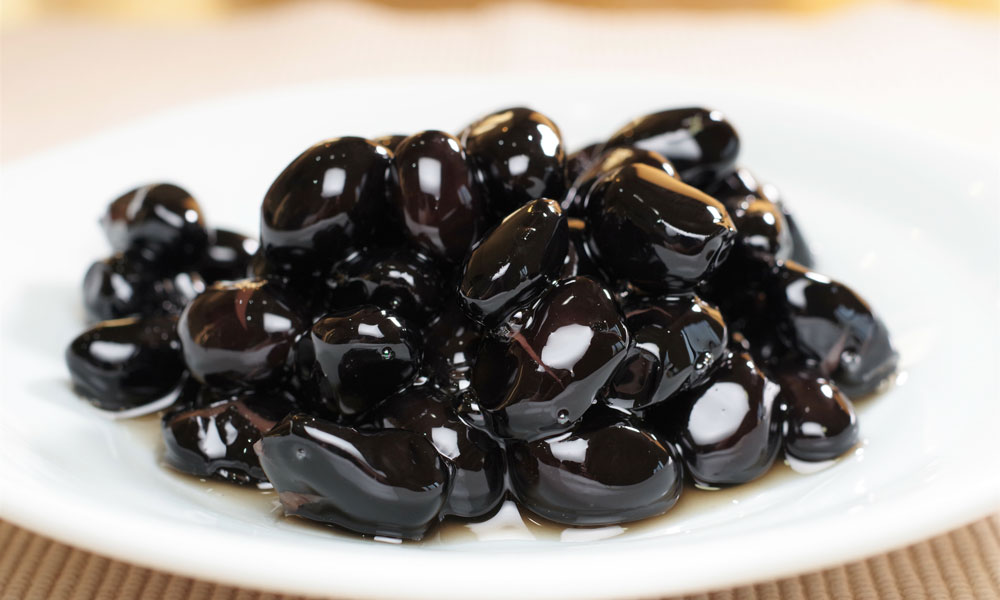
Kuromame (black soybeans) are eaten during New Year’s celebrations as symbols of health and diligence. Their glossy surface resembles polished ink stones, reflecting light only when looked at closely.
Kurogoma (black sesame) paste, meanwhile, is thick, aromatic, and deeply satisfying—Japan’s equivalent of liquid ink for the tongue.
To eat these is to participate in an aesthetic of patience. Both foods take time to prepare and reward the eater with subtle sweetness—an edible metaphor for discipline and serenity.
Eating as Meditation
In recent years, chefs have begun framing Japanese cuisine as “culinary mindfulness.”
To chew slowly, to appreciate the color contrast of rice and nori, is akin to tracing brush lines.
Some fine-dining restaurants now design Sumi-e plates, using black soy reduction as brushstrokes over white porcelain.
Dining becomes performance art: every dish, a calligraphy of flavor.
The silence between bites mirrors the white space of paper—the art of pause.
In that sense, Japanese cuisine is Sumi-e you can taste.
Cultural Resonance Beyond Japan
Abroad, the trend of “black foods” has gained traction—not as novelty, but as expression.
From New York’s charcoal ice creams to Parisian black-sesame financiers, chefs echo the minimalist contrast of ink and paper.
Each creation pays quiet tribute to Japanese aesthetics, transforming color into emotion.
By embracing black, they reject excess and return to essentials—the same lesson sumi-e has taught for centuries.
A New Palette for the Future
As sustainability reshapes gastronomy, natural pigments like bamboo charcoal and black soy take center stage.
They connect food to craft, health to heritage.
To eat black is to celebrate the invisible—to acknowledge that beauty often hides in shadows.
And just as sumi-e painting teaches, every shadow contains light.
deepens your connection to Japanese tradition.
Explore and purchase hand-selected Japanese calligraphy artworks:
https://calligraphyartwork.stores.jp/

コメント