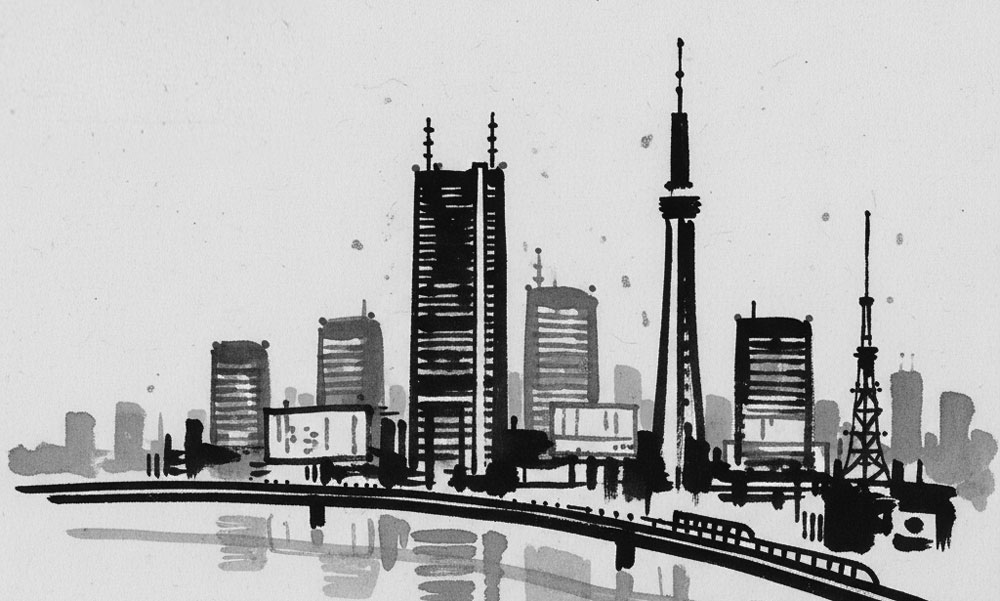
Why the World Is Falling in Love with Ink Again: Sumi-e and the Mindfulness Economy
In 2025, analysts of the global ink stick market noted something remarkable: demand for traditional sumi ink was rising, not declining. After decades of digital acceleration, people across continents are rediscovering the stillness of the brush, the weight of natural paper, and the meditative rhythm of black ink.
What seems like a niche revival of Japanese calligraphy (shodo) and sumi-e painting is, in fact, part of a much broader movement—the global search for mindfulness and authenticity. From Tokyo to New York, Kyoto to Copenhagen, ink is no longer only a material; it is a metaphor for calm.
The Quiet Growth of the Ink Stick Market
According to 2025 research on global art materials, sales of Japanese ink sticks and liquid sumi ink increased by nearly 8% year-on-year. The drivers were unexpected: not only professional artists and calligraphers, but also wellness coaches, educators, and therapists began purchasing sumi supplies for mindfulness sessions.
The market expansion reflects a simple truth—black ink carries emotional clarity.
Unlike synthetic paints, traditional sumi ink is made from soot (pine or oil) and animal glue. The slow grinding on a wet stone releases both fragrance and focus. This physical ritual—before any line is drawn—creates a rare meditative state.
In workshops across Europe, instructors describe sumi-e painting as “breathing with the brush.” Participants say that each shade of grey reflects their inner state; no stroke can be undone, only accepted.
Sumi-e as a Language of Stillness
Sumi-e was never only about landscapes or bamboo. It was, and remains, a philosophy of perception.
Born from Chinese ink painting and reshaped through Zen in medieval Japan, sumi-e teaches that empty space is as vital as ink. The whiteness of paper is not background; it is presence.
In this sense, every sumi-e piece is a dialogue between movement and pause, action and awareness. In today’s overstimulated world, that quiet dialogue feels revolutionary.
Digital artists now imitate sumi textures on tablets, yet many admit that “digital ink” cannot capture the fragrance, irregularity, and impermanence of real soot and water. The material’s unpredictability mirrors life itself—beautiful precisely because it cannot be controlled.
From Meditation to Marketplace
Corporations have noticed. Wellness resorts in Bali and California offer Sumi-e Mindfulness Retreats, blending meditation with painting. Japanese brush sets are now featured in concept stores alongside matcha bowls and incense.
The phrase “ink wellness” may sound ironic, yet it summarizes a profound cultural shift. For centuries, Japanese monks used the act of ink grinding as preparation for sutra copying; today, office workers use it to reset their minds. The global economy of attention fatigue is creating a new economy of stillness.
Sustainability in Black
Beyond mindfulness, sumi-e aligns naturally with the values of sustainability.
Traditional ink uses renewable materials—soot from burning pine or sesame oil, and glue derived from natural collagen. Modern Japanese makers, such as those in Nara and Kyoto, are experimenting with plant-based binders and carbon-neutral kilns.
An ink stick can last years. When diluted, even a single drop produces multiple tones. Minimal waste, maximum expression: a sustainable philosophy disguised as art.
In an age when “eco-luxury” defines the design market, the aesthetic of restraint—so familiar in Japanese culture—has become a global aspiration. Sumi-e embodies it effortlessly.
Artists Bridging Tradition and Modernity
Contemporary Japanese artists have carried sumi-e into galleries, installations, and even NFTs.
Yu-ki Nishimoto’s dynamic sports sumi-e drawings, for example, reimagine ink as kinetic energy. Abroad, artists like Kazuaki Tanahashi teach “Brush Meditation” at universities, demonstrating that ink can be both a tool of expression and spiritual balance.
Meanwhile, younger illustrators mix sumi with digital scanning, letting its organic gradients breathe inside animation. The result: a cross-cultural, cross-medium renaissance of ink.
Ink as a Universal Breath
Every society, at some point, returns to silence.
For today’s global citizen—surrounded by glowing screens—the rhythmic sound of ink on paper feels like heartbeat therapy.
Sumi-e’s market growth, then, is not only an economic story but a spiritual one.
It shows that mindfulness, sustainability, and cultural authenticity are converging in a single gesture: the brushstroke.
deepens your connection to Japanese tradition.
Explore and purchase hand-selected Japanese calligraphy artworks:
https://calligraphyartwork.stores.jp/


コメント