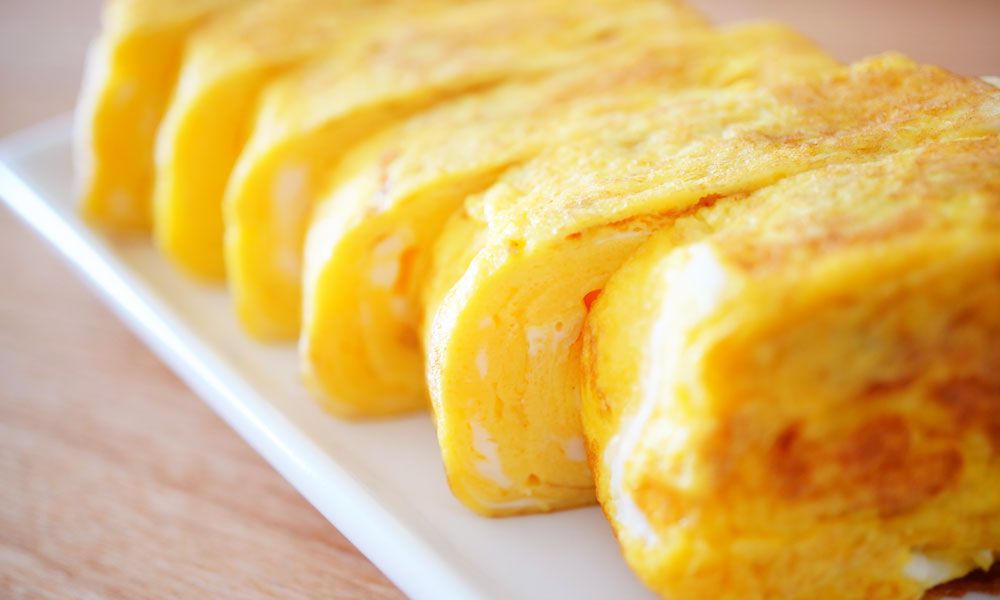
Tamagoyaki—Japan’s layered omelet—is a quiet icon of home kitchens, bento boxes, and sushi counters. This column reframes it for English-speaking readers as a gateway to Japanese culture you can taste, understand, and then preserve through Japanese Calligraphy. We connect regional styles to aesthetics and propose a simple path to turn breakfast into a meaningful, collectible memory—ideally in collaboration with a Japanese artist.
The “regional grammar” of tamagoyaki
Across Japan you’ll find two major tendencies:
- Kantō (Tokyo) style: slightly sweet, gently browned, rolled into a tidy block.
- Kansai (Kyoto/Osaka) style—dashimaki: looser, silkier, and lighter in color because it contains more dashi; served with grated daikon.
The contrast is delicious and instructive: sweetness and caramel notes versus umami-forward subtlety. Both are about balance, heat control, and the beauty of layered form.
Signature Home Recipe: Tokyo-style Tamagoyaki (1 loaf / 2–3 servings)
Ingredients
- 3 large eggs
- 2–3 tsp sugar (adjust to taste)
- 1 tsp soy sauce
- 1–2 tbsp dashi or water
- A pinch of salt
- Neutral oil for the pan
Equipment
- Rectangular tamagoyaki pan (a small round pan works in a pinch)
- Bamboo mat (makisu) for shaping (optional)
Steps
- Whisk eggs with sugar, soy sauce, dashi (or water), and salt until just combined—avoid too much foam.
- Warm the pan on medium-low. Oil lightly and wipe off the excess.
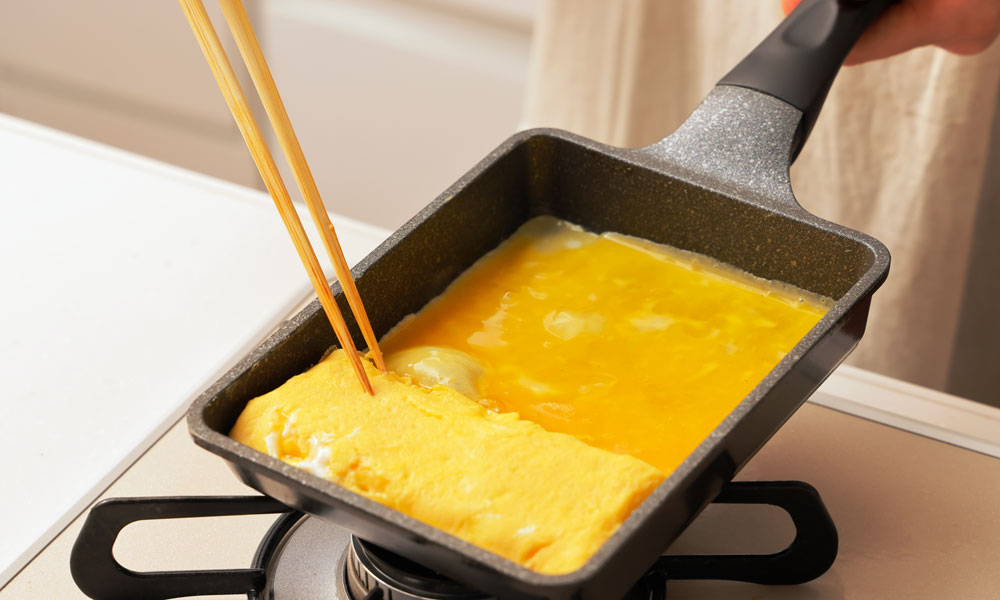
- Pour a thin layer of egg. When it’s half-set, roll from far edge to near edge.
- Oil the empty part of the pan. Push the roll back to the far side. Add another thin layer, lifting the roll so the new egg slips underneath. Roll again.
- Repeat to create 3–4 layers. Remove when lightly browned.
- (Optional) Wrap in a bamboo mat for 30–60 seconds to square the sides. Rest briefly, then slice.
Serve
Great warm or at room temperature. Pair with rice and pickles, or place atop sushi rice for a nostalgic Tokyo flavor.
Variant: Kansai-style Dashimaki (silky dashi omelet)
Ingredients
- 3 large eggs
- ¼ cup (60 ml) dashi
- 1 tsp mirin (optional)
- ½ tsp light soy sauce
- A pinch of salt
- Neutral oil
Steps
Work as above, but keep the heat gentler and the layers thinner—the higher dashi ratio creates a tender, custardy texture. Serve with grated daikon and a touch of soy sauce. Aim for no browning to let the pale gold color shine.
Aesthetic cue
Notice the cross-section: parallel layers, soft sheen, and steam drifting in the “empty space” of the plate. That controlled simplicity echoes the idea of ma—meaningful space—central to both plating and Japanese Calligraphy.
Why “tamagoyaki × calligraphy” works
Behind a small dish lies a world of names, seasons, and techniques.
- A menu handwritten in brush script already visualizes flavor as story.
- Collect or commission a Japanese Calligraphy piece with the dish name (「玉子焼」/「出汁巻」), a place name, or a seasonal word (kigo). The work encodes taste as memory.
- Collaborate with a Japanese artist to create pocket-sized pieces—a “Breakfast & Seasons” mini-series that pairs morning foods with one-character themes like 「旨」(umami), 「香」(aroma), or 「間」(space).
Experience design: Morning Taste & Ink
- Five-minute briefing: Kantō vs. Kansai, how heat and seasoning shape texture.
- Live roll: the hush of the pan, the sound of layers lifting, the final squaring in a bamboo mat.
- Live calligraphy: one-character works for dish/place/season.
- Take-home set: recipe card + small calligraphy piece, optionally numbered and signed.
- Give back: donate part of proceeds to culinary or cultural preservation.
How to practice—search, observe, preserve
- Search: Look up the style you want before traveling; learn the base ratios so the tasting is intentional.
- Observe: Note color (browned vs. pale), texture (tight vs. custardy), and plating (how negative space frames the slices).
- Preserve: Finish by acquiring a small piece of Japanese Calligraphy—your edible moment becomes a lasting, portable story.
Conclusion
Tamagoyaki is everyday grace: simple ingredients, precise technique, and regional personality. It’s a perfect bridge from kitchen to culture. When you seal that experience with Japanese Calligraphy, you turn breakfast into a collectible that lives on your wall—binding taste and ink, and deepening your connection with Japanese culture and the hand of a Japanese artist.
deepens your connection to Japanese tradition.
Explore and purchase hand-selected Japanese calligraphy artworks:
https://calligraphyartwork.stores.jp/

コメント