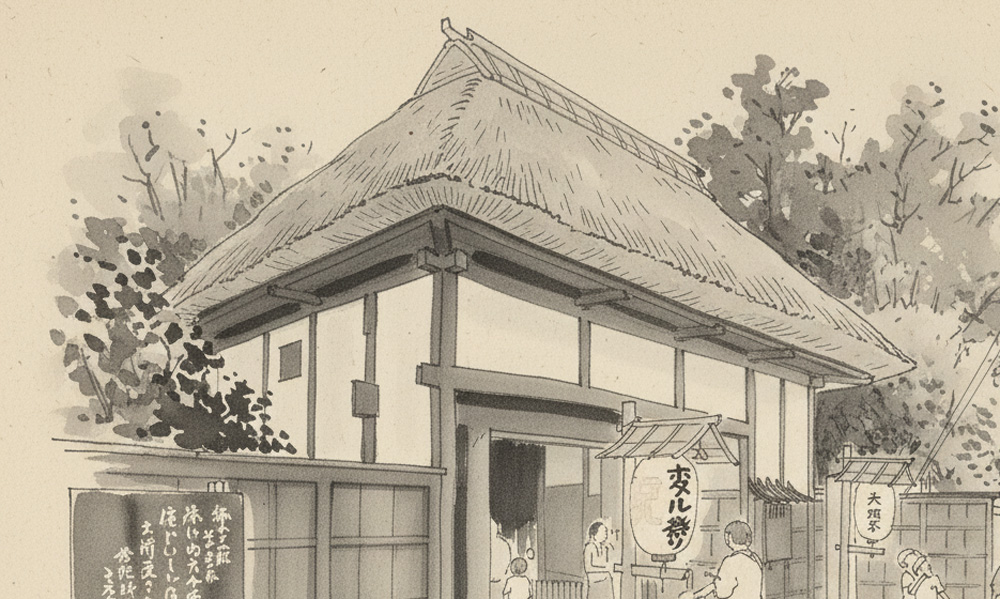
Sumie (sumi-e, Japanese ink painting) builds worlds with black alone: the calibrated dance of line, controlled wash, and the designed emptiness of ma (intentional negative space). Instead of color, Sumie uses gradations of black to suggest season, moisture, and air. This guide clarifies terms, short history, core aesthetics, and how to look—so beginners can read and enjoy the work with confidence.
1) Sumie vs. “Ink Painting” — what we mean here
In Japan, suibokuga (ink painting) is the broad umbrella. Sumie is the practice-oriented name that puts line and wash center stage. In English it’s often written sumi-e. Works range from postcard-size studies finished in minutes to large sheets where damp and dry passages collide. Crucially, the white is not “leftover space”—it’s an active shape that completes the image.
2) Short history (very brief)
- Origins: East Asian ink culture meets Japanese aesthetics influenced by Zen, valuing essence over detail.
- Japanese development: Paper, brush, and ink technologies allowed artists to embrace bleed, blur, and dry edge as expressive choices. Beyond landscapes and birds-and-flowers, quiet still life and seasonal atmosphere also became core subjects.
- Today: Sumie lives everywhere—from small works for everyday rooms to bold pieces for gallery walls around the world.
See how bleed width and dry edge actually look in finished pieces (paper and moisture matter):
https://calligraphyartwork.stores.jp/
3) The three pillars: Line, Wash (Tones), and Ma (designed emptiness)
- Line: entry → pressure → release. One stroke contains tempo and breath; you can “hear” speed and weight.
- Wash: the same black reads warm or cool depending on wet/dry, layer order, and timing.
- Ma: the white is a shape you compose. Showing the contour of emptiness makes the painting breathe.
Mini-glossary
- Bleed: soft halo along fibers; shifts with humidity, paper, and speed.
- Dry edge: the thin, darker rim at a boundary; made on purpose with slightly drier load and steady motion.
- Sizing: paper treatment that slows soak; helpful when you want crisper edges while learning.
4) Tools, briefly (why they matter—not just what they are)
- Ink (bottled / ink stick)
- Bottled sumi: consistent and friction-free for study.
- Ink stick: grinding time centers the body and gives deeper, more variable blacks.
- Brush: a medium brush is the baseline. Hair blends (goat/wolf/mix) change spring and load.
- Paper: washi tends to favor organic bleed and fiber glow; practice pads make edge control easier.
- Stone & dish: keep three deliberate dilutions ready so tones are chosen, not guessed.
To calibrate your eye, compare depth of black and white-space design across professional pieces:
https://calligraphyartwork.stores.jp/
5) Classic subjects and what to look for
- Bamboo (take): rhythm of nodes; leaves show decisive entry and clean release—that’s where “wind” lives.
- Orchid (ran): light, quick leaves; save your blackest tone for the flower’s heart to place quiet tension.
- Plum (ume): winter clarity—mid-tone branches with blossoms stamped in a slightly darker wash.
- Chrysanthemum (kiku): petals radiate from the center; stop just before the circle feels closed so it still breathes.
6) How to look (three rules that won’t steer you wrong)
- Breath in the line: is there a tiny beat at changes of direction or thickness?
- Black design: can you clearly read dark / middle / light without everything drifting to gray?
- Contour of the white: does the paper’s white act as a shaped partner, not empty leftover?
7) Sumie vs. “ink drawing”—why they feel different
Both use black, but Sumie is time-based: washes and edges change as moisture moves. In many ink drawings, line leads and fill follows; in Sumie, wash breathes and line sets the spine. The trace of dampness and the state of the last edge often decide the mood more than outline does.
8) Quick FAQ
How do I train my eye fast?
Compare a few works with clearly separated dark / middle / light values; then study how the white shapes are drawn.
Any tips for displaying Sumie at home?
Avoid direct sun and high humidity. A mat (mount) creates an air gap that helps keep paper from buckling.
Sumi vs. India ink—what’s the difference?
Many India inks include resin and dry more water-resistant. For Sumie, start with sumi so paper × moisture behavior becomes your baseline; then compare.
9) Bringing black and ma into daily life
Sumie is maximum resonance from minimal means. Where black and white lean into each other, air and season enter. Start with a postcard-size piece and notice how black changes with the hour and light—it’s a quiet habit that keeps rewarding attention.
Deepen your connection to Japanese tradition.
Explore and purchase hand-selected Japanese calligraphy and Sumie originals:
https://calligraphyartwork.stores.jp/


コメント