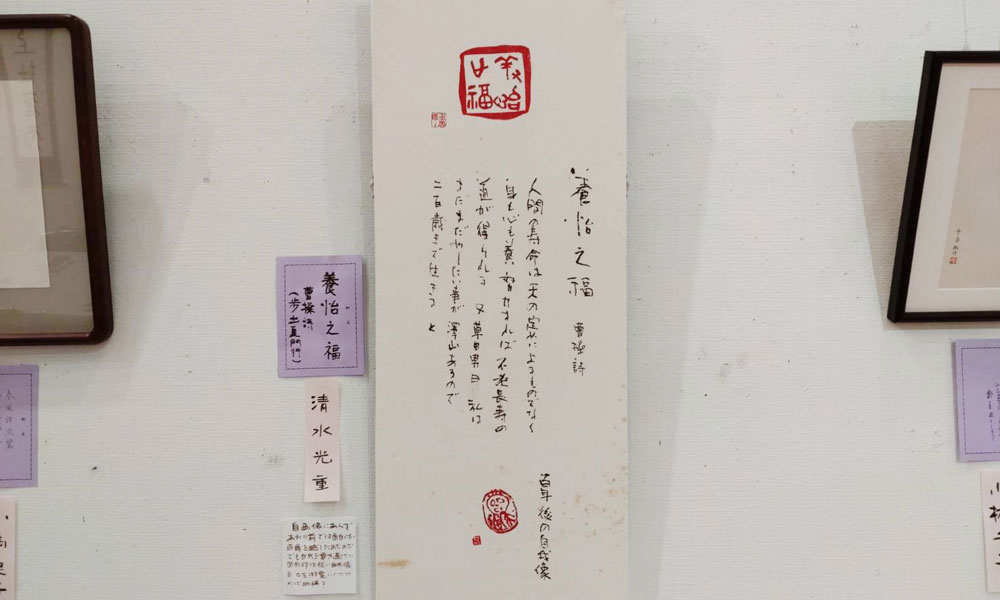
If you want to understand shodo (Japanese calligraphy) beyond photos on a screen, November in Japan is the right moment. The air is dry, washi holds a crisp edge, and sumi ink reveals delicate halos where moisture meets fiber. This month, you can stand in front of competition-level works, trace the roots of tools and patterns from antiquity, and feel how public festivals turn streets into living galleries of characters. For readers interested in Japanese culture—and ready to invest in a meaningful piece by a Japanese artist—these are events where brush rhythm, pressure, and the design of space become tangible.
Before you go, anchor a few essentials. Shodo uses the “Four Treasures”—fude (brush), sumi ink (bottled or ink stick), washi (paper), and suzuri (inkstone). Styles range from kaisho (regular script) to gyosho (semi-cursive) and sosho (cursive). In the gallery, read the stroke like a path: the entry (kibitzu), the travel (movement and speed), and the exit (stop or sweep). In shrines and streets, notice how bold characters on placards, lanterns, and banners compress energy into a single, legible gesture—an everyday bridge between japan and culture.
This Month’s Real Events (Name • Dates & Times • Location)
- The 118th NITTEN (Japan Fine Arts Exhibition) • Oct 31 (Fri) – Nov 23 (Sun/Holiday), 10:00–18:00 (last entry 17:30), closed Tuesdays • The National Art Center, Tokyo (7-22-2 Roppongi, Minato-ku, Tokyo). The Syo (calligraphy) section gathers contemporary works in one place, ideal for comparing line sharpness, balance, composition, and the choreography of white space.
- The 77th Shōsō-in Exhibition • Oct 25 (Sat) – Nov 10 (Mon), 8:00–18:00 (until 20:00 on Fri/Sat/Sun/Holidays; last entry 60 minutes before closing), open daily during the run • Nara National Museum (Nara City). Encounter materials, tools, and ornament from the Nara period; connect silk-road aesthetics and ancient craft to today’s usuzumi (light ink) washes and feathered edges.
- Tori-no-Ichi (Ōtori Festival) at Hanazono Shrine • First Tori: Nov 11 (Tue) Eve Festival ~15:00–24:00 / Nov 12 (Wed) Main Festival ~12:00–24:00; Second Tori: Nov 23 (Sun) Eve ~15:00–24:00 / Nov 24 (Mon, substitute holiday) Main ~12:00–24:00 • Hanazono Shrine (5-17-3 Shinjuku, Shinjuku-ku, Tokyo). Lanterns, placards, and stall signs create a nocturnal field of bold letterforms; it’s a vivid lesson in how writing lives inside commerce and prayer.
- Shichi-Go-San Blessings at Meiji Jingu (Kaguraden) • Throughout November, reception 9:00–16:20; services ~9:30–16:30 roughly every 30 minutes • Meiji Jingu, Kaguraden (1-1 Yoyogi-Kamizono-cho, Shibuya-ku, Tokyo). Observe etiquette, then study the “祝い/寿/健 (celebration, longevity, health)” family of auspicious words in real contexts before trying them yourself at home.
How to “read” brushwork on site
Move your eyes as if you’re the brush. Follow the line’s center of gravity—where the width is carried—and watch how it swells or thins. Examine the ink’s fringe: crisp on dry fiber, soft where moisture lingers. Step back to weigh the architecture of white space (ma): inner white within a character and outer white surrounding the mounting or frame. In Syo halls at NITTEN, these choices reveal each artist’s plan; in Nara, ancient materials make today’s decisions legible; in Shinjuku’s festival, letters become social signals; in Meiji Jingu, ritual converts characters into lived meaning.
For collectors and supporters
If a work moves you, confirm three things before purchase: viewing distance at home, light temperature (daylight vs. warm), and the relationship between seal (tenkoku) and signature—small shifts change the room’s balance. For newcomers, bottled sumi ink lowers friction so you can practice stroke order and pressure daily; an ink stick becomes rewarding once your routine is steady. Either way, a good frame and UV-safe glazing will keep black truly black.
Why this column now
Global interest in shodo japanese calligraphy continues to rise as museums, festivals, and shrines concentrate programming in November. That makes it a practical month for a culture-first itinerary—see a national competition, meet ancient sources, walk a night market of living letters, and end with a family rite. It’s a compact arc through Japanese culture that supports living craftspeople and connects you directly with a Japanese artist’s hand.
deepens your connection to Japanese tradition.
Explore and purchase hand-selected Japanese calligraphy artworks:
https://calligraphyartwork.stores.jp/


コメント