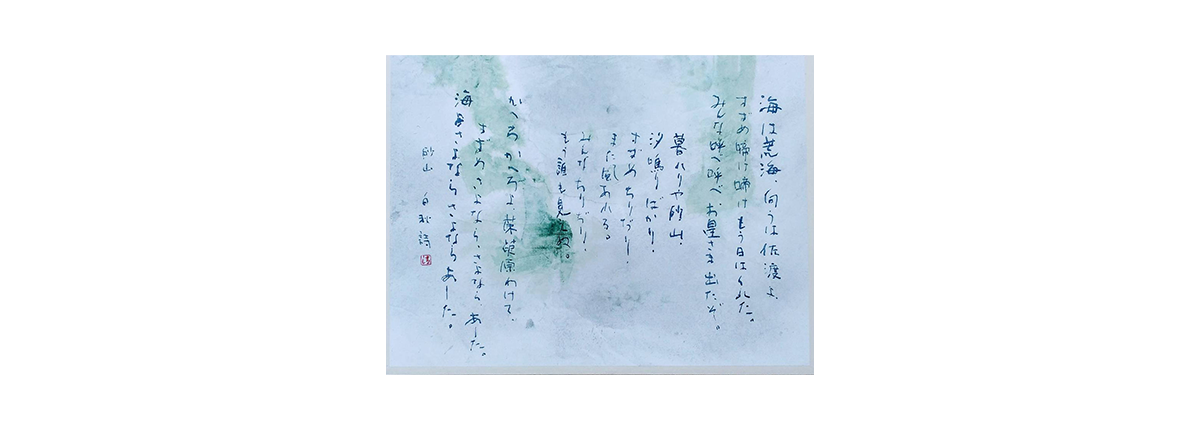
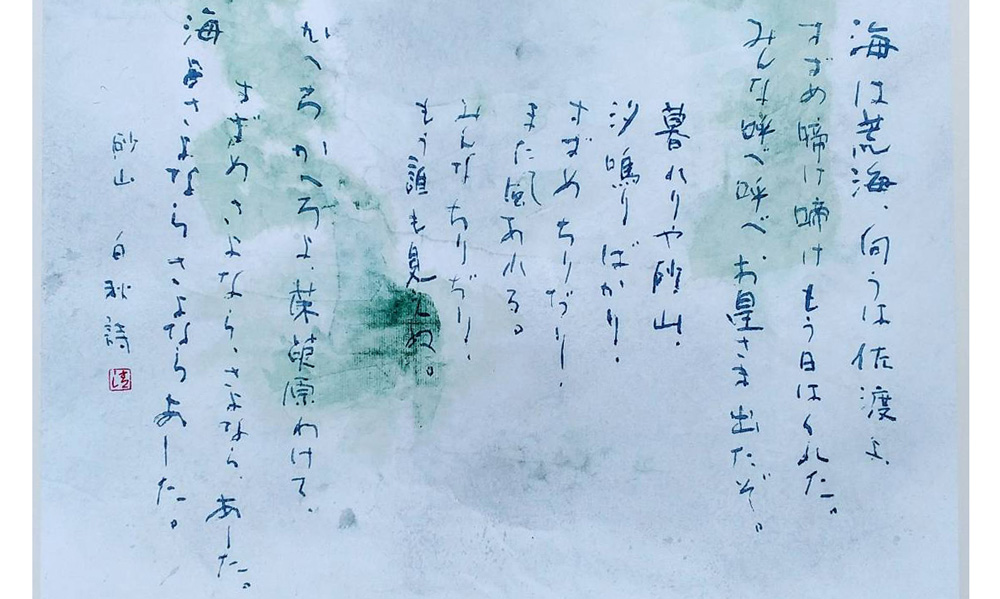
Across the span of Japanese history, few transformations were as quietly radical—and as enduring—as the arrival of Chinese characters. The Asuka Period (late 6th century to around 710 CE) formed the crucible in which script, ritual, and governance fused into a single cultural force. More than a technology for making marks, writing reorganized memory. It turned prayer into practice, authority into a visible signature, and the rhythms of daily life into something teachable. Long before museums celebrated brush and ink as fine art, the habits that would blossom into Shodo Japanese calligraphy were already training hands, eyes, and breath.
To appreciate why the Asuka Period matters, imagine encountering a fully formed writing system for the very first time. Until then, the Japanese archipelago had no indigenous script. Words lived in speech, in ritual gesture, in objects that held power, but not in fixed lines that could travel from one person to another intact. The first sight of kanji—Chinese characters—arriving with sutras, images, and specialists from the continent was not simply impressive; it was world-ordering. The gifts were spiritual and practical at once. Buddhism offered doctrine and discipline; the script that carried that doctrine offered a method for ruling, recording, and remembering.
The Shock of Arrival: Kanji, Buddhism, and Statecraft
Traditional accounts date the arrival of Buddhism to 538 or 552 CE via Baekje on the Korean Peninsula. Whatever the precise year, the change was structural. Script did not arrive as decoration; it arrived as a bundle—sutras to copy, commentaries to consult, models to imitate, and rituals to perform. Because a sutra must be exact, it trains the body: posture straight, brush vertical, pressure consistent, breath paced. Because government documents must be legible and repeatable, they train the mind: categorize, count, certify, and store. Within a generation, characters served both altar and archive. Calligraphy was not yet Shodo in name, but the ethic of Shodo—discipline, proportion, and the eloquence of restraint—was already there.
Three Phases on the Road from Presence to Practice
It helps to think of early script adoption in three overlapping phases. First came an Era of Sacred Objects (1st–4th centuries), when characters appeared as aura rather than text—a gleam of gold or bronze that signaled prestige and contact with a continental “center.” Then an Era of Emulation (5th–6th centuries), when inscriptions on elite grave goods arranged characters as patterns that proclaimed status. Finally, in Asuka, an Era of Practical Use (7th century onward), when script became routine: taught to scribes, archived by temples, circulated by courtiers, and copied with care by those for whom accuracy was devotion.
This arc is more than chronology; it is a deepening of habit. Writing moves from being seen to being used to being lived. The same marks that once glittered as symbols become instruments for counting households, drafting orders, stabilizing doctrine, and standardizing ritual time. In the shift from presence to practice, the hand learns how to carry authority without ornament.
Gateways and Filters: Geography Shapes Adoption
Northern Kyushu, oriented toward the Tsushima Strait, was the logical gateway between Japan and culture on the continent. Ships, ideas, and people entered there, but gateways filter as much as they admit. Early on, literacy was confined to select elites: members of the court, temple communities, and skilled artisans who could carve or copy with fidelity. Yet the more script was asked to do—edicts, inventories, dedicatory inscriptions—the more institutions grew around it. Courts demanded clerks; temples trained copyists; repositories accumulated texts and model sheets. Script culture, once foreign, began to grow local roots.
What Script Made Possible: Presence, Proof, and Policy
The power of writing in Asuka Japan sat at the intersection of three domains:
- Diplomacy. Kanji offered a shared framework with neighboring polities. A letter written in a recognized hand traveled farther and carried more weight than a spoken message. An inscription on bronze or stone, legible across borders, conferred presence long after the sender was gone.
- Administration. Censuses, tax registers, and official orders required repeatable forms and legible characters. When copying formats and seal impressions became standardized, the state acquired something priceless: the ability to remember in a way that could be audited.
- Religion. Buddhism’s emphasis on scripture and commentary created daily demand for copying and reading. This was not sporadic literacy; it was institutionalized practice. The page became a place for discipline, and accuracy became a path to insight.
Material Traces: Artifacts that Teach
Archaeology preserves the thrill and the texture of early literacy. The Inariyama Sword (471 CE, Saitama) bears an inscription of 115 characters whose elegant lines record names and claims of status. Its precision signals something fundamental: long before schools generalized instruction, an inscription could legitimize authority for those who could commission and interpret it. The Shaka Triad Halo Inscription at Hōryū-ji (623 CE, Nara), executed in refined kaisho (standard script), pairs doctrine with design; dedicatory text and sculpted image reinforce one another. By the time of the Tago Stele (711 CE, Gunma), semi-cursive strokes suggest a comfortable familiarity with continental models—Wang Xizhi admired among them—and a local hand confident enough to adapt rhythmic flow to Japanese needs.
These pieces are more than museum items. They show how writing migrated across materials—steel, bronze, stone—and how each substrate taught the hand different lessons: resistance under the chisel, bite under the burin, glide under the brush. They also show writing’s early audiences. A halo inscription speaks to community and devotion; a sword inscription speaks to lineage and claim; a stele speaks to posterity. The script is one, but its functions diverge, and in that divergence, a culture learns how to speak with lines.
Training the Hand: From Kaisho to Flow
If you watch a skilled scribe, you see not only letters but a choreography. In Asuka Japan, the Four Treasures—fude (brush), sumi ink, suzuri (ink stone), and washi (paper)—formed a small table on which the world could be ordered. Beginners stabilized the basics with kaisho, fixing stroke order, proportion, and pressure. As confidence grew, gyōsho (semi-cursive) introduced controlled speed and elastic rhythm. The page learned to breathe. Negative space—ma—was not a pause between strokes; it was a partner. A good line did not merely connect points; it created silence that made meaning audible.
This training produced more than attractive characters; it produced an ethic. Posture aligned the body with purpose. Breath regulated attention. Pressure taught moderation. In learning to copy a sutra correctly, one learned to govern the self—a link between technique and virtue that would define Shodo as a way (dō) rather than a stylistic trick.
Ritual, Devotion, and the Page as Practice
Because sutras must be exact, copying became prayer by hand. The page is where doctrine meets what can be done today. A line missed is a thought missed; a stroke corrected is a breath interrupted. In this discipline, Asuka calligraphy established a form of mindfulness that contemporary readers can still feel: the visible record of attention. When a dedicatory inscription on a statue or stele pairs kaisho clarity with a modest flourish, it is performing two duties—communicating content and modeling conduct.
That dual role mattered outside the temple as well. When court documents adopted standardized formats, they taught readers how to read and officials how to present themselves. A seal, a signature, a consistent script: these were performances of authority as much as they were administrative necessities. In the alignment of lines, an entire political order learned to align itself.
The Aesthetics of Restraint: How Design Emerged from Duty
No culture invents an art of calligraphy by deciding to be elegant. Elegance emerges when function asks for clarity and people begin to find beauty inside that demand. In Asuka Japan, doctrinal clarity pushed writing toward kaisho, but the human desire for speed, emphasis, and energy pulled it toward gyōsho. The tension generated a new taste: the pleasure of a decisive line framed by generous ma. The tooth of washi, the viscosity of sumi, the drag of a slightly dry brush—these material facts translated into values: restraint, rhythm, and the eloquence of what is left out.
From that sensibility, later Japanese artists would draw not only letterforms but a method of seeing—one that extended to architecture, garden design, and even social etiquette. In tea rooms and reception halls, hanging scrolls (kakemono) and square boards (shikishi) carried phrases sized to the space. Script did not merely decorate walls; it adjusted rooms. Season after season, the quiet authority of ink on fiber tuned the atmosphere of the host-guest relationship.
Audiences, Lineages, and the Making of Memory
As script culture expanded, it produced its own infrastructure of memory. Courts and temples accumulated archives; families preserved exemplar sheets; teachers passed down models annotated with cautions and praise. Copying sutras generated a lineage of hands; drafting orders generated a lineage of formats. The prestige of bronze and steel was joined by the prestige of paper and training. For a community of practice to endure, it needs both texts and people to keep them alive. Asuka Japan built both, slowly and unevenly, but with enough consistency that later centuries could inherit not only words but ways.
Foreign Yet Familiar: From Borrowed Script to Native Use
It would be wrong to imagine that kanji quickly felt “Japanese.” Foreignness lingered—in the shapes of characters, in the weight of precedent, in the philosophical assumptions carried by the texts themselves. Yet familiarity grew. A scribe who copied a text a hundred times had a local hand by the end. A court that issued orders in set phrasing acquired a local voice. Even the visual rhythm of lines on washi began to signal an aesthetic recognizably Japanese: clear but not rigid, energetic but not breathless, measured but not mechanical.
That process—of adopting without dissolving into imitation—is a hallmark of Japanese culture. In Asuka, it began with script and spread outward. The page taught how to balance fidelity and invention. That lesson trained more than scribes; it trained a civilization to hold the foreign and the local in productive tension.
Why Asuka Still Matters (for readers, artists, and designers)
For readers seeking Japanese culture today, the Asuka Period explains how writing became more than a skill. It became a medium for identity and a method for thinking. For artists, it shows that Shodo Japanese calligraphy was never only about “beautiful writing”; it was about aligning hand, breath, and purpose so that the visible carries the invisible. For designers and architects, it reminds us that spacing, pacing, and material choice communicate as strongly as explicit content. The Asuka page was already a room, and the room, a page.
For those who practice Shodo now, Asuka is encouragement. Technique is not a barrier to expression; it is the path to it. The stabilized proportion of kaisho and the controlled flow of gyōsho are not opposites but collaborators. When a single stroke lands cleanly and the surrounding ma feels alive, one is repeating—not imitating—the early lesson of the age: that authority rests not in excess but in clarity.
Key Takeaways (answers to questions people actually ask)
Did Japan have a native script before kanji?
No. Kanji provided the first writing system; kana would emerge later from cursive character forms.
Why locate the story in Asuka rather than earlier centuries?
Because Asuka is when script became routine—taught, copied, archived, and woven into administration and ritual. Earlier encounters existed, but Asuka normalized use.
How did Buddhism shape early writing?
By generating sustained demand for reading and copying sutras, which institutionalized training and set standards for accuracy and legibility.
What roles did kaisho and gyōsho play?
Kaisho stabilized legibility and proportion; gyōsho introduced speed, emphasis, and rhythmic continuity. Together they trained both the hand and the eye.
What do artifacts like the Inariyama Sword, Hōryū-ji inscriptions, and the Tago Stele show?
They trace writing’s migration across materials and functions—from lineage claims in metal to dedicatory clarity in religious art to semi-cursive confidence in stone—revealing both adoption and adaptation.
How does all this lead to Shodo as an art?
By turning necessity into habit and habit into taste. Once accuracy and restraint became second nature, expressiveness could ride on top without losing clarity—exactly the balance Shodo values.
Conclusion: Humble Beginnings, Lasting Legacy
Picture the first encounter with written words—the shock of seeing language fixed in gleaming metal or incised stone. In Asuka Japan, that shock became method. Characters organized prayer and policy, recorded memory, and trained the body to move with clarity. From court to temple to workshop, writing stitched together texts and people into a lineage that could remember itself. Long before calligraphy entered galleries, it had already entered rooms, schedules, and gestures. That is why the Asuka Period still speaks to us: it shows how a civilization learns to think in lines.
Today, when we speak of Japanese culture and admire the work of a Japanese artist wielding brush and ink, we are witnessing the matured form of an Asuka lesson—that a measured stroke can bind past to present and power to purpose. Shodo Japanese calligraphy is the refined descendant of a practical revolution. It is proof that the gateway to civilization can be as simple, and as demanding, as the way a hand meets paper.
Deepen your connection to Japanese tradition.
Explore and purchase hand-selected Japanese calligraphy artworks:
https://calligraphyartwork.stores.jp/

コメント