How Japan “Accepts—and Redesigns—Events (for Better and for Worse)” (Japanese culture / Japan and culture)
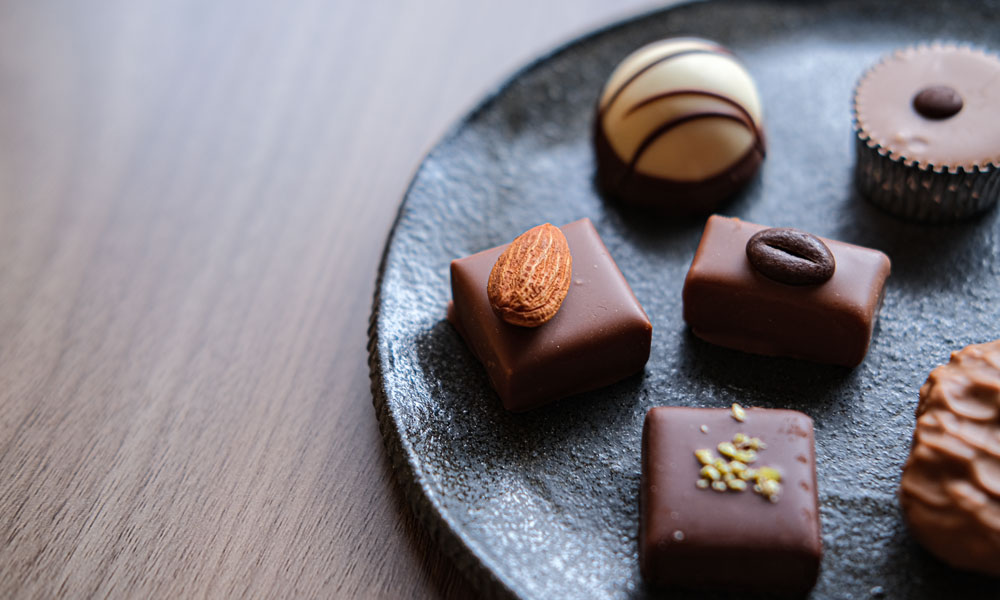
If you grew up in an English-speaking country, Japan’s Valentine’s Day can feel upside down. Many people first hear: in Japan, women give chocolate to men. The point I want to explore isn’t whether that’s “right” or “wrong.” What’s genuinely revealing—especially if you’re interested in Japanese culture—is how an imported event gets absorbed, adapted, and eventually “re-engineered” into something that fits everyday life.
I’m Mitsushige Shimizu. I began studying calligraphy in 1950 and have continued refining my practice ever since. I learned fundamentals and spirit under Takako Oishi (a judge for Nitten), deepened my historical and theoretical grounding with Kasumura Masuda (honorary professor at Kokugakuin University), and inherited the craft of seal engraving under the guidance of the renowned engraver Kozo Yasuda. I’ve also had periods of my life standing at a classroom podium as a teacher, watching how seasonal customs and social expectations move through young people with surprising speed.
Valentine’s Day is a perfect lens for understanding Japan and culture because its timeline is long, its transformation is visible, and its “benefits and burdens” are both easy to recognize.
A Simple Timeline: Japan’s Valentine’s Day Goes Back to the 1930s
Japan’s Valentine’s Day wasn’t born suddenly after World War II. It has a prewar “introduction phase,” followed by a long, very Japanese process of popularization through retail, media, and social roles.
1) 1930s–1940: “Valentine’s chocolate” appears in Japan (as an introduced idea)
Corporate historical records from confectionery companies indicate that the idea of giving chocolate on Valentine’s Day was introduced in Japan in the early 1930s, with English-language newspaper advertising appearing before 1940. The crucial point: the concept existed—but it wasn’t yet a mass-seasonal ritual.
This matters because it shows something consistent in Japan:
events can be present without being “socially installed.” Installation comes later, when the right social circuits are built.
2) 1950s: Postwar recognition, still limited—often perceived as a “lovers’ day”
In the 1950s, Valentine’s Day begins to be recognized as something like a “lovers’ day,” but it remains limited in reach—more “known” than “practiced” at a national scale.
From my own memory of Japan’s postwar atmosphere, many outside customs were still faint outlines. People were rebuilding lives; seasonal rituals already existed (New Year, Setsubun, festivals). A foreign holiday had to find a practical entry point.
3) 1958: The real switch—department stores turn it into a visible “season”
1958 is often described as a turning point because department stores created the kind of “stage” Japan excels at: a seasonal sales floor with a narrative.
This is one of the most important cultural mechanics to understand:
- An event becomes “real” to the public when it becomes visible in everyday places.
- In Japan, visibility often means department stores and gift sections: packaging, signage, and a clear idea of “what you do.”
Interestingly, early Valentine’s fairs reportedly struggled at first—another essential detail. It tells you that Japan’s event culture isn’t pure spontaneity; it’s constructed. The first attempts can fail, then succeed once the format fits.
4) 1960s–1970s: Japan’s distinctive model takes shape—women → men, chocolate as the medium
As confectionery makers and retailers push the seasonal message, the custom spreads. By the 1970s, the now-famous Japan-specific pattern becomes widely recognized:
women give chocolate to men as a form of confession or expression of feeling.
From the outside, this looks like the “reverse” of what you might expect. From inside Japan, it’s the result of redesign:
- A clear role assignment
- A clear gift category
- A clear calendar slot
In other words: a “socially installable” format.
5) Late 1970s onward: A second invention—returns, and the birth of White Day
Japan doesn’t stop at “giving.” It often builds a return pathway—a second act that stabilizes the ritual.
By the late 1970s, the concept of White Day (a day for men to return gifts roughly a month later) is promoted and begins to settle into the calendar.
Even if you don’t care about candy, this is culturally revealing:
Japan frequently turns a single event into a two-step system that encourages continuity. It also makes the event more “complete” as a social exchange.
6) 1980s–1990s: Office circulation expands—and “obligation” enters the story
As more women join workplaces, Valentine’s Day becomes an office circuit. This period is where the event gains power—and also where it acquires friction.
When an event enters the office, it can turn into:
- a gesture of thanks,
- a social lubricant,
- or a quiet burden.
This is the era commonly associated with “obligation chocolate” as a concept: a gift not necessarily driven by romance, but by workplace etiquette.
7) 2000s–present: The relationship map widens—friends, self-gifting, and more
In the 2000s, Valentine’s Day in Japan becomes less strictly “romance-only.” Labels multiply: gifts for friends, self-purchases, and other variations.
This evolution makes sense in Japan’s event logic:
- The more “entry points” you create,
- the more stable the custom becomes.
An event survives when more people can participate without needing a single specific storyline.
Why Japan Accepts Events So Easily: “The Power of Form”
Japan has a deep relationship with kata—a form, a pattern, a socially shared script.
A form can feel restrictive, yes. But it also does something extremely practical:
- It reduces uncertainty (“What am I supposed to do?”)
- It gives people a socially safe pretext (“Because it’s Valentine’s Day…”)
- It creates a sense of synchronized season (“We’re all in the same month”)
This is why “event acceptance” in Japan often looks smooth. It’s not always that people are passionate about the event itself. Sometimes they accept it because the form makes human interaction easier.
As a teacher, I saw this up close
When I stood in front of a classroom, I watched how February subtly changes the air. Children notice everything:
- who gives,
- who receives,
- who doesn’t participate,
- who wants to participate but can’t find a safe way.
A seasonal form can rescue a shy student—because it provides an excuse to express gratitude.
But it can also corner someone—because forms can become expectations.
That’s the double edge.
“For Better and for Worse”: When a Celebration Becomes a Task
Japan’s event culture is effective—but not always gentle.
The better side
- It creates chances to say what’s hard to say.
- It produces small moments of warmth in ordinary life.
- It encourages attentiveness: a note, a wrapper, a tiny seasonal choice.
The harder side
Once a form is installed, it can become:
- “something you should do,”
- “something you’re expected to do,”
- “something you feel guilty for skipping.”
This is especially true in workplaces and schools, where group dynamics amplify small behaviors.
Over time, the event risks becoming less about affection and more about management:
- managing relationships,
- managing appearance,
- managing compliance with the seasonal script.
A Practical Way to Enjoy Japanese Event Culture Without Being Consumed by It
If you’re an international reader who enjoys Japan and culture, here is one lesson I would offer—not as a rule, but as a way to stay comfortable:
Before you “participate,” decide your personal scale.
- Join lightly rather than dramatically.
- Observe the seasonal staging in department stores and stations.
- Make it personal: a small self-ritual can be more meaningful than a large public gesture.
Japan’s events work best when they stay human-sized.
What Valentine’s Day in Japan Teaches You About Japanese Culture
If you only remember one thing, let it be this:
Japan doesn’t just “accept” imported events.
Japan often redesigns them into a lifestyle-compatible system—complete with roles, return pathways, and seasonal staging.
That system can be:
- beautifully efficient,
- surprisingly comforting,
- and occasionally oppressive.
Valentine’s Day is not merely a quirky reversal. It’s a living example of how Japanese culture converts outside material into a functioning social form.
Deepen your connection to Japanese tradition.
Explore and purchase hand-selected
Japanese calligraphy artworks:

コメント