Japanese calligraphy isn’t merely “writing beautifully.” It’s an art shaped by kata—codified forms—and deliberate routines that steady the body, focus the mind, and infuse each stroke with spirit. The same Japanese culture of “refining the mind through form,” seen in tea ceremony, kendo, and Noh theater, lives at the heart of calligraphy. This column unpacks the meaning and practice of those rituals for readers outside Japan.
1) Kata: not a “how-to manual,” but an interface for the mind
In traditional Japanese arts and martial disciplines, kata links preparation → concentration → expression into a smooth path.
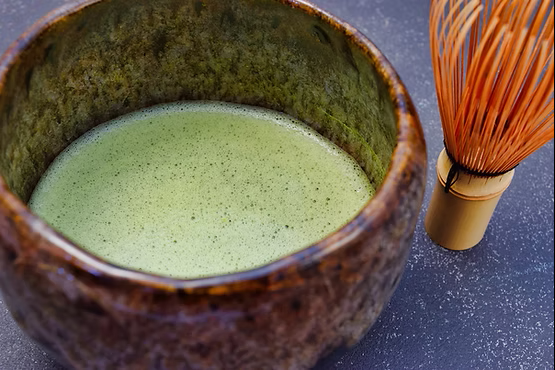
- Tea ceremony: placement of tools, the way you walk, and the sequence of gestures are a grammar of beauty and respect.
- Kendo/kyūdō: ordered movements unify breath and gaze, leaving little room for hesitation.
- Noh theater: by repeating fixed forms, the performer steps beyond the self and serves the work.
Calligraphy kata functions the same way. How you set your desk, place inkstone/ink/brush, grind ink, and touch the brush to paper are all switches for focus—reducing micro-decisions so more attention flows into creation.
2) The routine of calligraphy: a five-sense ritual
Preparation in calligraphy is a chain of small rites:
- Set the space: wipe the desk, place the paper, imagine the margins.
- Arrange the tools: inkstone, ink, brush, washi; distance and orientation support efficient movement.
- Grind the ink: add water and circle slowly on the stone—sound and scent naturally regulate breathing.
- Posture and gaze: align the pelvis, relax the shoulders, “listen” to the brush tip and the blank space.
- First stroke: lower the brush on the exhale; match breath to stop, hook, and sweep.
The key is sensory synchronization. Touch, sound, scent, vision, and breath braid together so the line shifts from something you “make” to something that emerges.
3) Shu–Ha–Ri in calligraphy: kata is a passage, not a destination
The classic path of Japanese arts—Shu (obey), Ha (break), Ri (leave)—maps neatly onto calligraphy:
- Shu: rinsho (faithful copying of masters) to embody shapes and order.
- Ha: experiment with materials and stroke qualities to grasp the meaning of kata in your own words.
- Ri: sublimate thought and feeling into a single stroke—arrive at your calligraphy.
Kata isn’t a constraint; it’s a runway to freedom. The deeper it lives in your body, the richer your improvisation and the more graceful your departures.
4) Designing ma: negative space is not silence, but music
What surprises many non-Japanese viewers is the primacy of blank space. In Japanese aesthetics, white is not “empty.”
- Breath space: the ma between lines creates rhythm and dynamics.
- Placement as dialogue: even a single character changes its “voice” with different margins.
- Pacing: pausing on purpose sharpens the impact of the next stroke.
Kata and routine are the blueprint that make this invisible design repeatable.
5) Try a 5-minute kata at home
Goal: raise focus through form and place your mind in one line.Tools: brush pen or water brush + water-writing sheet (or a sketchbook/paper).
- Set (30s): wipe the desk; align the paper’s top edge with your shoulders; sit tall.
- Breathe (30s): inhale 4 counts, exhale 6 counts, a few cycles; let the shoulders drop on the exhale.
- A small bow (3s): a brief nod to tools and paper to arrive in the present.
- One character (3 min): choose a meaningful kanji (e.g., 静 “calm,” 夢 “dream,” 心 “heart”) and write it three times only. Lower the brush on the exhale.
- Observe (1 min): quietly study thickness, fray, bleed, and balance of space. Don’t judge—notice and put it into words.
Tip: quality over quantity. Short rituals often boost concentration more than long practice without form.
6) A note on cultural respect
- Meaning matters: choose kanji with awareness of their nuance; it’s not mere decoration.
- East Asia is diverse: calligraphy traditions span Japan, China, Korea, and more—similar yet distinct.
- Order of learning: borrow the kata first; personal style grows fastest after Shu.
7) Conclusion: kata is a rail for freedom
Kata and routine don’t chain creativity; they strip away noise so expression can move. Calligraphy crystallizes a Japanese way of “shaping the mind through form,” turning a single stroke into intention and prayer. It’s a quiet technology anyone can try—and feel.
TL;DR (for social)
In Japanese calligraphy, kata (codified routines) align breath, posture, and tools so the brush can carry the mind. Kata is a railway to freedom—it reduces mental noise, designs meaningful ma (negative space), and lets one stroke speak. Try a 5-minute home routine: set the desk, breathe, bow, write one meaningful kanji three times, then observe the space between lines.
deepens your connection to Japanese tradition.Explore and purchase hand-selected Japanese calligraphy artworks:


コメント