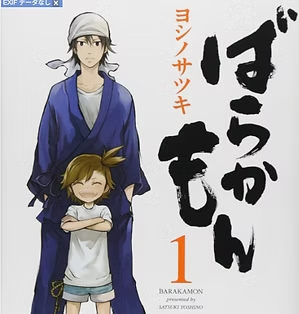
If you’re curious about Japanese culture and want something deeper than the usual “samurai and sushi” clichés, try stepping into the quiet intensity of shodo Japanese calligraphy—through manga.
Barakamon is a warm, funny, and unexpectedly profound story about an artist rebuilding his craft and his spirit, one brushstroke at a time.
What makes it special is balance: it’s not a textbook, yet you’ll naturally absorb the language of sumi ink, brush control, and artistic discipline. It’s also not a travel guide, yet you’ll feel the texture of rural Japan and the kind of community that shapes how people live—and how they create.
What Is Barakamon?
A young calligrapher, a public mistake, and a fresh start
The protagonist, Seishū Handa, is a rising professional calligrapher—serious, talented, and trapped by perfectionism. After an incident that costs him his composure (and his reputation), he’s sent away from the city to a remote island in Japan’s Gotō region.
There, Handa’s world flips. Children run into his home like it’s theirs. Neighbors appear without warning. Silence and noise alternate like breath. And slowly, the island becomes the “studio” he didn’t know he needed.
Why the title matters
In the Gotō dialect, “Barakamon” carries the sense of an energetic, lively person. That meaning fits the story beautifully: the island’s people don’t lecture Handa—they simply live, and their energy pulls him back toward authenticity.
Shodo Japanese Calligraphy, Shown as a Living Craft (Not a Museum Piece)
The tools you’ll notice on the page: brush, ink, paper, inkstone
Even if you’ve never practiced shodo, you’ll start recognizing the essentials:
- Fude (brush): softness, pressure, speed—how emotion can change a line
- Sumi (ink): deep black that can still contain “light” when diluted or moved differently
- Suzuri (inkstone): the ritual of preparation, not just the result
- Hanshi (paper): how absorbency, texture, and timing shape the final character
The series doesn’t over-explain. Instead, it lets you feel what calligraphy artists feel: tension before a stroke, relief after a clean line, and frustration when your hand can’t match your intention.
The real lesson: expression is not the opposite of discipline
Barakamon quietly argues something many Japanese artists know: technical skill is the foundation, but expression is the reason.
Handa begins by chasing evaluation—awards, juries, rankings. On the island, he’s forced to ask a harder question:
What am I trying to say with this ink?
That shift—away from approval and toward honesty—becomes the story’s emotional core.
Everyday Life as Creative Training: Japan and Culture Beyond the City
“Slow life” isn’t passive—it’s observant
Barakamon is often described as slice-of-life, but it’s more accurate to call it “attention-of-life.”
Island living teaches Handa to notice:
- the rhythm of people’s days
- the warmth of small traditions
- the beauty in imperfect moments
- the way community shapes identity
This matters for calligraphy because shodo isn’t only “writing beautifully.” It’s training perception—learning to place a single line with clarity, presence, and restraint.
A modern gateway into tradition
For readers outside Japan, the series works as a cultural bridge. You don’t need prior knowledge. You simply follow a human story—and discover that tradition is not old-fashioned when it’s practiced as a living craft.
Manga, Anime, and Live-Action: How to Experience Barakamon Today
Start with the manga (and notice the arc of the series)
The original manga began in 2008 and concluded as a complete story in 18 volumes, with additional content released later as a “bonus” volume (Vol. 19).
If you like stories that end cleanly, the main run is satisfying. If you want one more visit to the island’s atmosphere, the later volume is a gentle return.
Watch the anime for the feeling of brush + silence + laughter
The TV anime adaptation began airing in July 2014. It brings the island’s pace to life—voices, pauses, and the subtle comedy that sits right beside sincerity.
Try the live-action drama for a contemporary lens
A live-action drama adaptation debuted in July 2023. It’s another way to enter the story—especially if you enjoy performances, scenery, and the realism of daily routines.
Reading in English
An official English release is available through Yen Press, making it accessible to international manga readers who want a legitimate edition.
If You Love Sumi-e, You’ll Understand the Mood Instantly
If you’re drawn to sumi-e (Japanese ink wash painting), Barakamon will feel familiar even when it isn’t talking about painting.
Both arts share the same heartbeat:
- simplicity that requires skill
- negative space that carries meaning
- a respect for materials
- a quiet confidence in “one good stroke”
That’s why the series resonates across borders. It’s not just about shodo. It’s about creative identity.
Conclusion: A Quiet, Powerful Invitation into Japanese Calligraphy
Barakamon proves that shodo Japanese calligraphy can be approachable without being simplified.
It’s a story about learning—through community, failure, humor, and daily life—until your work finally sounds like your own voice.
If you want a manga that expands your sense of Japanese culture, deepens your appreciation of craft, and leaves you feeling lighter afterward, Barakamon is an ideal start.
Experience authentic Japanese calligraphy:https://calligraphyartwork.stores.jp/


コメント